To follow up on the previous article Unapologetic Joy: Why Screaming Off-Key to Music in the Car or Kitchen is Neurodivergent Self-Care… music isn't just something we listen to—it’s something we feel, and our bodies and minds react so positively to this.
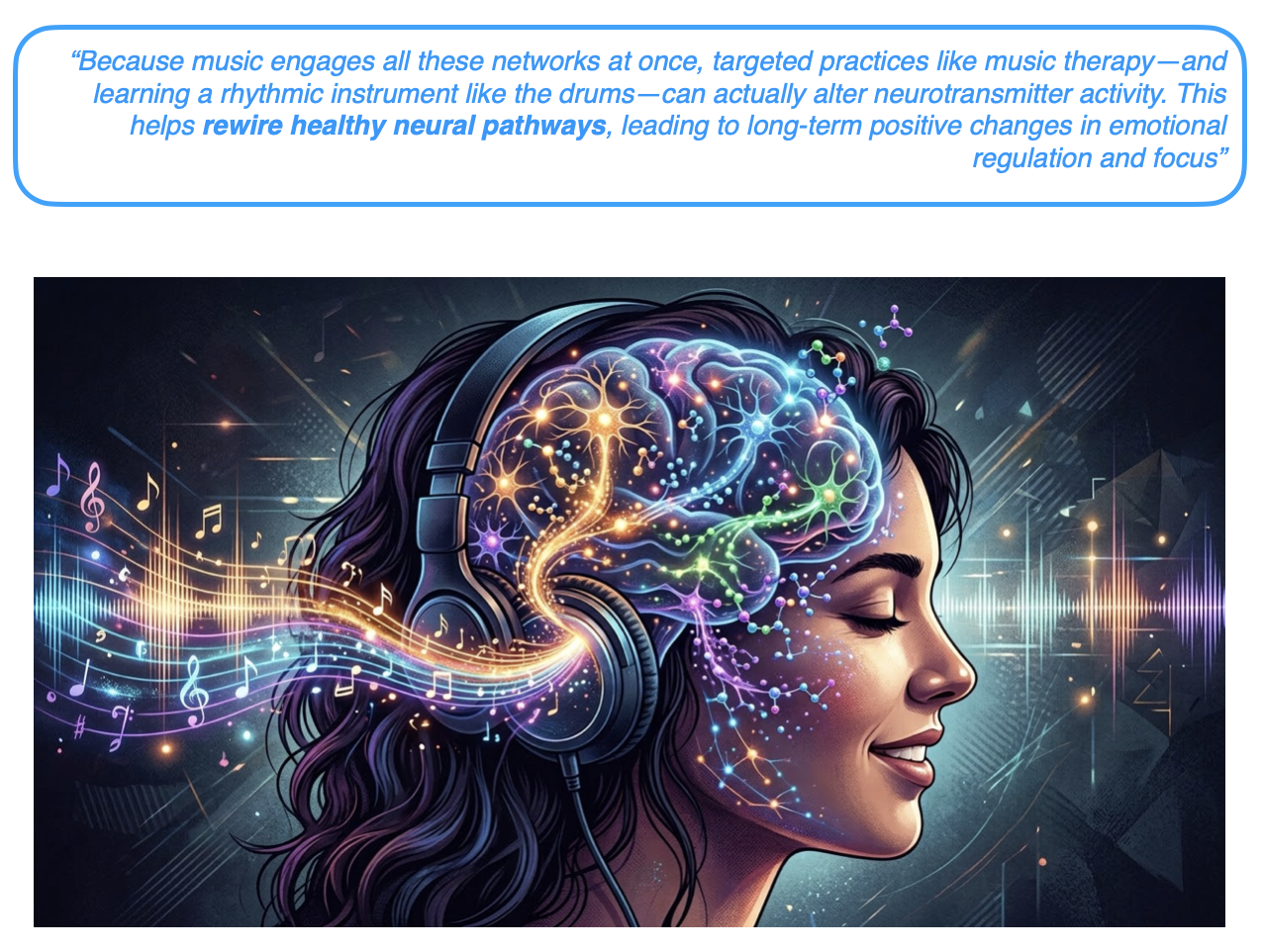
Music has the uncanny power to shift our mood in seconds. It can lift us up when we’re low, bring us to tears, calm a racing mind, or hype us up before a big task. It can make us feel completely isolated in our own thoughts, or instantly connect us to a room full of strangers (like at a concert).
How? — And, more importantly for those of us navigating ADHD — why does this matter?
Understanding the connection between music and your brain chemistry is like getting the user manual for your own mind. When you know how music impacts your nervous system, you can use it as a powerful, everyday tool for focus, emotional regulation, and mental well-being. Not to mention a crazy low-cost/high-performing form of therapy! And when we start to scratch the surface of the benefits that actually playing an instrument has… oh boy… it’s so powerful!
The Chemical Backbone of Your Mind
To understand how music works its magic, we need to talk about neurotransmitters—the chemical messengers that form the foundation of how we process mood, stress, motivation, and emotional resilience.
When people talk about mental health, you’ve probably heard phrases like "chemical balance" or "chemical imbalance” right? …Well here are the main players residing in our grey matter: (warning) complicated silly science names for things coming up - stay with me and just look at what they do:
Dopamine: The Reward and Motivator. Essential for drive, focus, and pleasure.
Oxytocin: The Bonding hormone. Key for trust, empathy, and social connectedness.
Serotonin: The Mood Stabiliser. Helps regulate anxiety, happiness, and overall mood.
Endorphins: The Natural Painkiller. Released during stress or physical exertion to boost the feeling of peace and well-being.
Norepinephrine & Cortisol: The Fight or Flight response. Norepinephrine acts instantly, while Cortisol is the slower-burning stress hormone.
Glutamate: The Exciter. Crucial for learning, plasticity, and strengthening working memory.
GABA (Gamma-aminobutyric acid): The Rest and Digest chemical. The natural opposite to stress hormones.
Acetylcholine: The Attention, Learning, and Memory driver.
OK, I think it’s safe to say most didn't really read all those scientific names properly, maybe not even what they are responsible for… That’s OK! What matters is that all that Mambo Jumbo works, and works together! And what it does for our body and mind is very important!
A Quick Brain Upgrade: From "Chemical Imbalances" to Circuit Health:
For years, popular science told us that mental health challenges like depression or anxiety were simply a matter of "having too little" of a specific chemical.
Modern neuroscience has shifted away from that oversimplified model. Mental health relies on circuit health. Neurotransmitters don't work in isolation; they change how brain networks communicate and how easily the brain can adapt, learn, and reframe experiences (known as neuroplasticity).
Instead of just topping off a single chemical, we want to help the entire system communicate better. And that’s where music comes in.
Music: The Ultimate Full-Brain Workout
Brain imaging scans reveal that when you engage with music, your brain lights up like the 4th of July!
Music activates various neural receptors, triggering the release of specific chemicals that govern different areas of cognition. But listening to or playing an instrument doesn't just stimulate one isolated spot—it is a full-brain workout.
When you interact with music, multiple areas fire simultaneously:
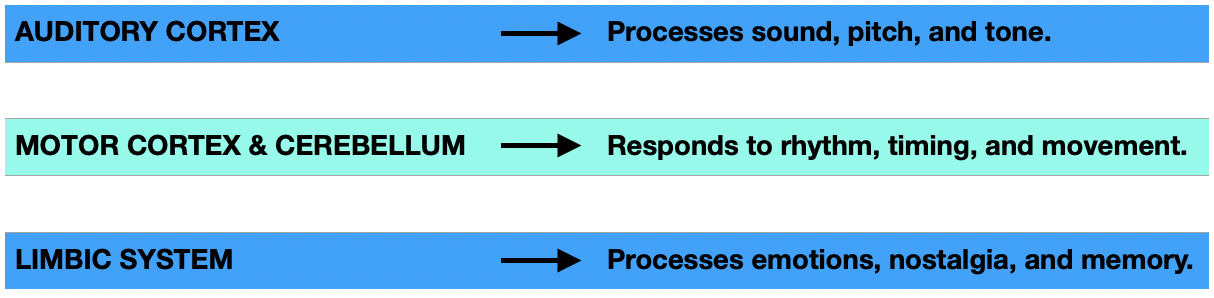
Because music engages all these networks at once, targeted practices like music therapy—and learning a rhythmic instrument like the drums—can actually alter neurotransmitter activity. This helps rewire healthy neural pathways, leading to long-term positive changes in emotional regulation and focus.
O.K. that’s all good… What About the "Heavy" Emotions though?
Can listening to sad, angry, or intense music actually be good for your mental health?
Simply put: yes.
Music gives us a safe, structured container to feel emotions like grief, anger, or sadness—feelings that might otherwise stay bottled up and cause damage down the road. Drumming along to a hard rock/heavy metal track or listening to a somber playlist allows for a therapeutic release (an emotional discharge) for your mind and body.
A Quick Note on Moderation: While processing heavy emotions through music is cathartic, staying in a perpetual state of rage or sadness isn't ideal. Use “heavy” or emotional music as a bridge to process how you feel, not a permanent dwelling place!
The Takeaway for ADHDers and Music Lovers
When you play an instrument—especially one as physical, rhythmic, and engaging as the drums—you aren't just learning a skill. You are actively fine-tuning your brain’s circuit health:
You get a dopamine hit from mastering a rhythm.
You activate acetylcholine and glutamate to sharpen your attention and working memory.
You trigger endorphins and GABA to release pent-up physical tension and stress.
Understanding how music affects your brain empowers you to use it intentionally. Whether you need to calm a hyperactive mind, find the motivation to start your day, or safely let off some steam, the drum throne, your car or kitchen (and your favourite playlist) is always waiting!
Turn up the volume, turn off your brain and just simply RESET!